Knowing how a website project runs makes you a better client: you know what to prepare, when your feedback matters most and why some changes cost more late in the project. Most professional teams follow the same seven stages, even if they name them differently.
Stage 1: Discovery and goals
The team learns about your business, customers, competitors and goals. Expect questions about what the website must achieve, who it is for and what success looks like. The output is a written scope with pages, features, timeline and price.
What you provide: goals, examples of sites you like, existing brand assets, logins for your current domain and hosting. A website design brief speeds this up.
Stage 2: Sitemap and content plan
The pages are mapped out and each one is given a purpose. Content needs are listed: who writes the copy, which photos are needed, which existing pages carry over.
What you provide: approval of the sitemap, and the content you are responsible for.
Stage 3: Wireframes and user experience
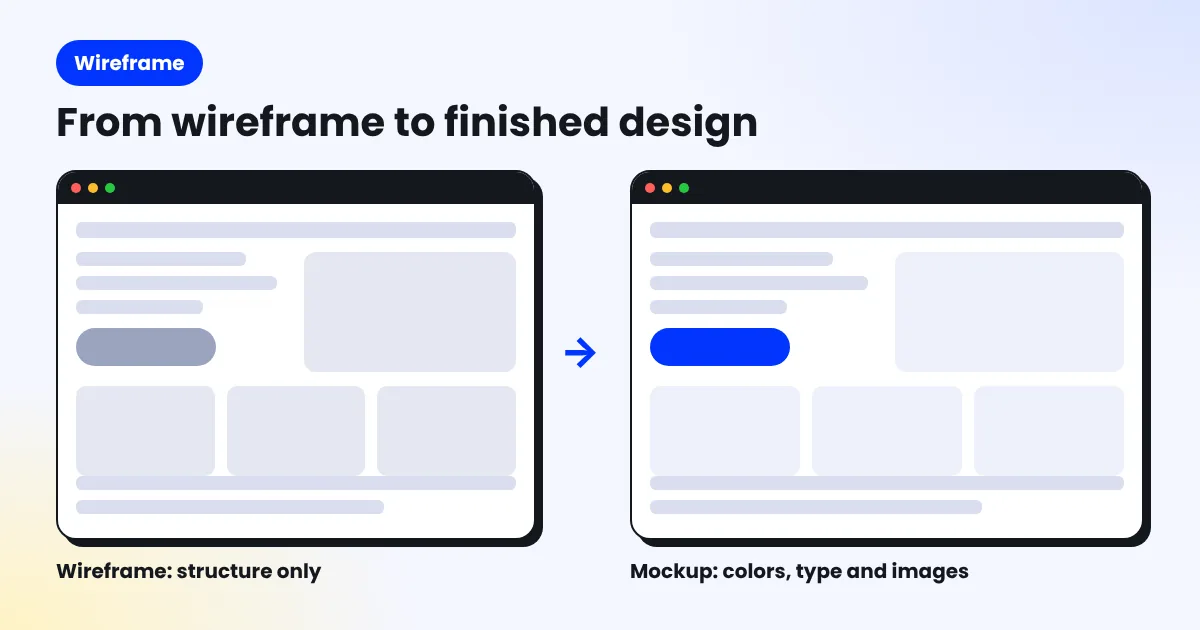
Wireframes are simple grayscale layouts showing what goes where on key pages, without colors or images. They let everyone agree on structure and the path a visitor takes to contact you before visual design starts. This is the core of UI/UX design.
What you provide: feedback on layout and priorities. Structural changes are cheapest here.
Stage 4: Visual design
The designer applies your brand (colors, typography, imagery) to the wireframes, usually designing the homepage first, then inner pages, for desktop and mobile. Some teams share a clickable prototype.
What you provide: consolidated feedback within the agreed revision rounds.
Stage 5: Development
Developers turn the approved designs into a working site on the chosen platform, connect forms and integrations, set up the CMS and add content. Work usually happens on a staging site you can preview.
What you provide: final content, access to third-party tools (booking, payment, CRM), and quick answers to technical questions.
Stage 6: Testing and quality assurance
Before launch, the site is checked on different browsers and devices, forms and integrations are tested, pages are measured for speed (for example with PageSpeed Insights), basic accessibility is reviewed against WCAG principles, and SEO settings are confirmed.
What you provide: a final review on your own phone and computer, and sign-off.
Stage 7: Launch and handover
The site goes live on your domain, redirects from any old site are activated, analytics and Search Console are connected, and the sitemap is submitted. You receive logins, files and a short walkthrough of editing. Our website launch SEO checklist lists the technical checks for this day.
After launch: support and growth
A website needs care after launch: updates, backups, security monitoring and small changes. Agree on a support period and a website maintenance plan, then review analytics after the first month to see where visitors drop off.
Where website projects get delayed
- Content arrives late. This is the most common cause. Start writing early.
- Too many decision-makers. Name one person who gathers feedback and approves.
- Scope creep. New features mid-project are fine but should be quoted and scheduled, not squeezed in.
- Missing access. Domain, hosting and third-party logins should be ready before development.
How WebAppSols runs a project
Our projects follow four simple steps: you tell us your goal, we agree the scope and quote in writing, we build with progress shared along the way, and we launch and stay available afterward. The stages above sit inside those steps. Read more on how we work.
Frequently asked questions
How long does website development take?
It depends on page count, features and how quickly content and feedback arrive. A written timeline with milestones for each stage is the best way to know.
What is the difference between web design and web development?
Design decides how the site looks and how visitors move through it. Development builds it so it works: the code, CMS, forms and integrations.
Can I make changes after the design is approved?
Yes, but changes are cheapest at the wireframe stage and get more expensive once development starts, so give structural feedback early.
Do I need to provide all the content before development starts?
Ideally most of it. Designing with real content produces better layouts and avoids rework.
Need help with this?
Want to see this process applied to your site? Request a free quote and we'll send a written plan covering each stage, timeline and price.